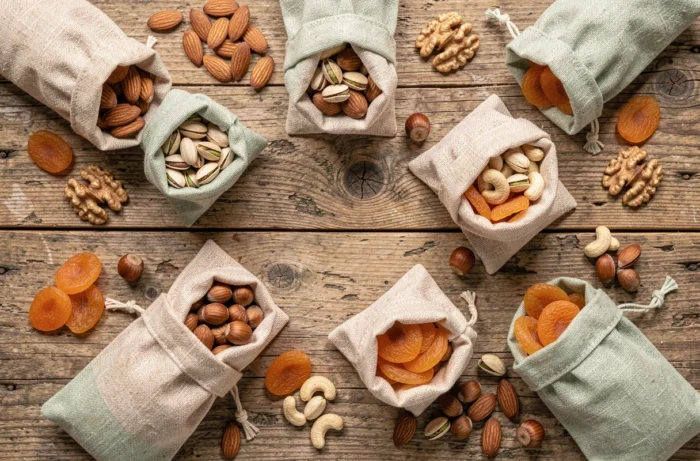
You open a bag of snack mix thinking you’ll have a light bite, but before long you’ve eaten far more than you intended. The problem isn’t which type of nut you choose, but how you fit it into what you’re already eating. Understanding the calories in almonds and other dried foods can help you set some boundaries, but portion size and when you eat them are what really make the difference.
Nuts and dried fruit: two groups with different calorie profiles
Almonds, walnuts, raisins and dates are often lumped together under the label “dried fruit.” In practice, nuts and seeds (almonds, walnuts, hazelnuts, pistachios) and dehydrated fruit (dates, dried apricots, figs, raisins) provide very different kinds of energy.
Nuts get their high calorie density from fat, mostly unsaturated fatty acids. Dried fruit, on the other hand, concentrates the natural sugars found in fresh fruit, sometimes with added sugar or lemon juice during the dehydration process. Dehydration also concentrates minerals, but above all, it results in a much higher sugar content than fresh fruit.
This distinction makes all the difference when managing calories. A snack of hazelnuts or almonds provides fat and fiber, which slow digestion. A handful of raisins delivers a quick burst of carbohydrates, which can be useful before exercise but is less suited to a sedentary snack. For a closer look at the differences between nuts, see this detailed comparison of calories in almonds and other dried fruit.
Almonds, walnuts, hazelnuts: choosing a variety doesn’t make much difference
People often compare labels to find the “lowest-calorie” nut. The reality is that the differences between common nuts are modest when you compare equal portions. Switching varieties won’t make up for an oversized portion.

Roasting doesn’t make almonds lower in calories, either. Salted roasted almonds have roughly the same energy content as plain almonds. What changes is the addition of salt or smoky flavoring, which can make you eat more because they’re more appealing.
Another common pitfall is the seed and dried fruit mixes sold in supermarkets. For example, the Ciqual food composition table lists a mix of salted seeds and raisins separately from plain almonds or hazelnuts. Adding raisins or sweetened cranberries to a bag of nuts increases its sugar content without you noticing, since you tend to focus on the ingredient highlighted on the packaging.
Include a measured portion without adding unnecessary calories
Rather than searching for the perfect nut, it helps to ask yourself a simple question: does this handful of almonds replace something else in my snack, or am I adding it on top?
A snack that already includes yogurt and fruit doesn’t need extra nuts. If you want to add almonds or walnuts, remove something with a similar calorie content—for example, the fresh fruit—or reduce the portion of the other foods.
Three practical ways to portion without weighing
- As a snack on its own, a small handful of plain almonds (enough to fit in the hollow of your palm, not your whole hand) can satisfy your hunger thanks to the fiber and fat, without exceeding a reasonable amount.
- In muesli or a bowl of oatmeal, add a few flaked almonds or chopped walnuts, but reduce the amount of cereal accordingly. The bowl’s total calorie content stays about the same.
- Before exercise, dried fruit such as dates or dried apricots can be useful because they provide readily available carbohydrates. But eating them in front of a screen at 4 p.m. adds sugar when your body doesn’t need it right away.
A useful habit is to take the amount you want out of the bag before you start eating. Snacking straight from the packet leaves you with no sense of portion size.
Added sugar and salt: what to look for on the label
Ingredients vary widely from one dried fruit product to another. An organic dried apricot with no added sugar and a sugar-coated dried apricot don’t have the same calorie impact, even if the net weight is identical.
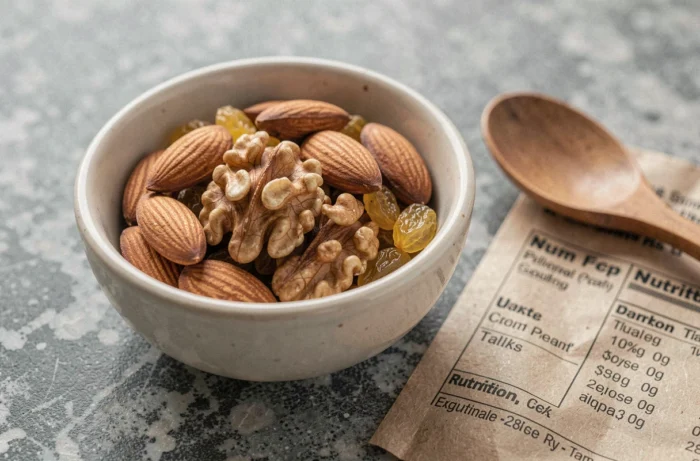
For nuts, pay attention to salt and flavorings. Plain, unsalted almonds are the easiest choice to keep track of. When a product is labeled “dry-roasted,” “smoked” or “salted,” you’ll generally eat more because it’s more appetizing, making portion control harder.
For dried fruit, check two things:
- Whether it says “no added sugar” or “sweetened with concentrated fruit juice,” as this affects the simple carbohydrate content.
- The suggested serving size on the packaging, which is often smaller than the amount you actually serve yourself.
Fiber content can vary depending on the variety and drying method, making comparisons between brands less reliable than comparisons between broad food groups. You’ll get more useful information by comparing “plain nuts” with a “sweet-and-salty mix” than by comparing two brands of almonds.
A small portion of nuts or dried fruit fits perfectly well into an everyday diet. The only problematic dried fruit is the kind you eat in excess, on top of a meal or snack that’s already complete. Measuring your portion, checking the ingredients list, and deciding whether the nuts are replacing or adding to what you already eat: these three habits matter more than any calorie ranking.