Validating a wish on Parcoursup for an art school is like locking a door with double bolts: the platform locks any modifications once the process is finalized. Some institutions, on the other hand, roll out the red carpet… but only for a few days each year, often without prior notice. The rules of the game change without warning, and those hoping for a clear manual may wait a long time.
Many applications fail due to avoidable pitfalls: poor choice of program, generic cover letter, hastily prepared files. Refusals then come in mechanically, without appeal. It’s also impossible to precisely guess what each school expects: each application is built blindly, under pressure, risking stumbling over contradictory instructions or deadlines that fly by at breakneck speed.
Parcoursup and art schools: what you need to know before diving in
Parcoursup, the essential registration portal after the baccalaureate, channels the ambitions of thousands of candidates towards a multitude of artistic programs: art schools, design schools, applied arts schools, national higher education institutions, conservatories, heritage institutions… The diversity is there, but clarity is sometimes lacking.
Here’s an overview of the types of schools accessible via the platform:
- art school
- design school
- applied arts school
- national higher school of art
- but also conservatories and heritage schools
Each institution imposes its own rules of the game: shifting criteria, tight schedules, requirements sometimes hidden in the corners of the Parcoursup files. Careful reading is essential, or you risk missing crucial information.
The journey begins with the creation of a file: you must formulate your wishes, provide specific documents, and adhere to the requests of each institution. Among these documents, three are essential:
- cover letter
- portfolio
- academic results
The portfolio, in particular, offers a unique field of expression: it must convey a personality, a perspective, a singular trajectory. The juries do not only assess technique: they seek a story, coherence, and genuine curiosity. A bland cover letter or a lackluster portfolio sends the application back into the crowd, out of the running.
But Parcoursup does not have a monopoly: some schools, often private or highly specialized, maintain their own recruitment system. It is then imperative to gather information about their processes: for example, the steps to join ESMA do not follow the same calendar or expectations. There, selection is based on the strength of the application, the clarity of the project, and the ability to defend a creative approach before a sometimes demanding jury.
Programs like Appéa (public art preparatory courses) support certain profiles, paving the way for structured and tailored paths. Scholarship students can also rely on Crous to facilitate their access to national schools. Given the complexity of the system, organizing early, collecting all the dates, and anticipating technical requirements are the best weapons to face the selection.
What steps to take to successfully enroll in an art school after the baccalaureate?
As soon as you obtain your baccalaureate, whether general or technological like the bac STD2A, the countdown begins. Whether it’s a public or private art school, there’s no room for improvisation. The first step: register on Parcoursup, fill out your file, provide your academic background, and formulate your wishes. You must pay attention to every deadline: one oversight, and the process closes.
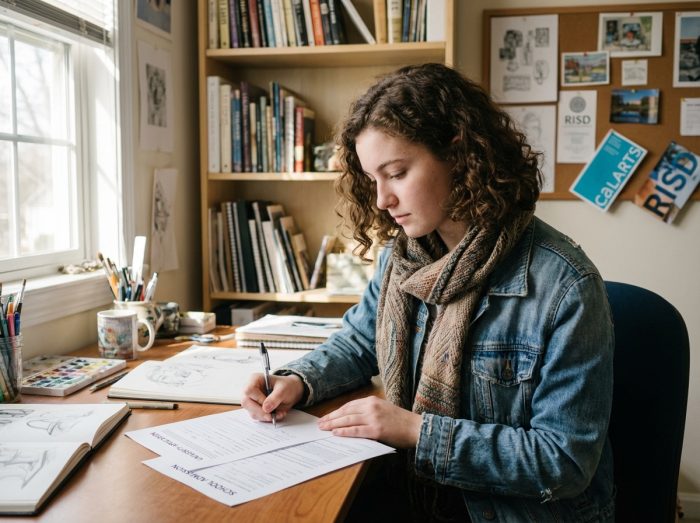
Next comes the preparation of the portfolio, or “book.” This collection should include sketches, personal projects, experiments, and works created in class or outside. A successful portfolio is a coherent sequence where technique intersects with personality and commitment. The cover letter, on the other hand, must go beyond a catalog: it should express the meaning of the project, the artistic approach, and knowledge of the school. The more developed the reflection, the more the application scores points.
After the selection based on the file, some schools invite candidates for an oral interview, while others organize written tests. These steps serve to gauge motivation, the ability to defend one’s approach, and to discuss one’s creations. The written tests, if scheduled, assess general knowledge, analysis of works, or artistic practice.
For profiles coming from other backgrounds, joining an art preparatory course or a Manaa (art applied level-up) year remains a relevant option. These programs allow students to acquire the tools for the competition, build a solid file, and sometimes confirm or refine their project. An internship in the artistic sector also adds depth to the journey and enriches the portfolio: a hands-on experience that often makes the difference.
Cover letter templates, practical tips, and mistakes to avoid to maximize your chances
Cover letter: structure, personalization, and coherence
The cover letter should not resemble a school assignment or a copy-paste found online. The jury expects a unique voice: detail your artistic approach, explain how the desire to join a particular program developed, and link your experiences and aspirations to the identity of the school. If you have completed internships, engaged in cultural activities, participated in associations, or taken part in volunteer actions, mention them: they demonstrate genuine openness and curiosity. Avoid clichés: here, every word must count.
To structure your letter, here are some points to develop:
- Explain your project: why choose this program, why aim for this particular school?
- Highlight your influences, practices, and your relationship with creation and experimentation.
- Describe at least one significant achievement that holds meaning in your artistic journey.
Portfolio: diversity and reflection
A convincing portfolio is not improvised. It should showcase diversity: sketches, photographs, objects, videos, installations… Select the most accomplished works and show various techniques. Each project deserves a short text: explain your approach, the context of creation, and what you sought to explore. A portfolio that is too uniform or too academic often leaves juries wanting more.
Errors to avoid
The pitfalls are well-known: identical files for all schools, lack of a common thread, careless presentation. Too many external influences, a calibrated letter without depth, a portfolio that doesn’t step outside the academic framework: these are what cost points. Taking the time to adjust each file, to refine every detail, to proofread and clarify your message: these are the efforts that ultimately pay off. The coherence between the portfolio and the cover letter weighs heavily in the jury’s decision: it marks the difference between an ordinary candidate and a remarkable personality.
In the end, enrolling in an art school after the baccalaureate means accepting uncertainty and confrontation, but it also means seizing the chance to carve out your own path, away from established routes. The challenge: to transform the administrative ordeal into a creative springboard. Who will rise to the challenge?