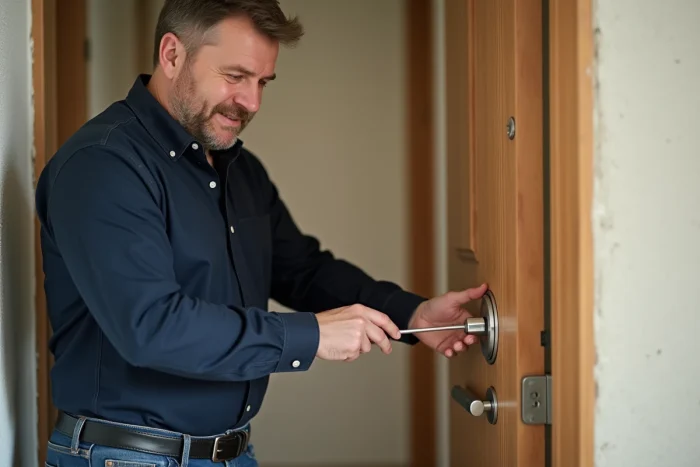
Blocking the bolt of a lock is neither black magic nor an engineering feat. A few targeted gestures and everyday tools are enough, provided you know where to press. Once reserved for professionals, some methods are now part of the troubleshooting arsenal accessible to everyone, as long as you can read between the lines of the mechanism.
Understanding the role of the bolt in your lock’s security
The bolt, that small discreet piece of metal nestled in the lock, often goes unnoticed until everything depends on it. Embedded in its strike plate, it transforms the most mundane door into a true barrier: on a main entrance, it acts as a deadbolt; inside, it becomes a turn bolt; for service access, it obeys the half-turn. It is responsible for a door’s resistance against even the most forceful break-in attempts.
| Type of bolt | Ideal use | Security level |
|---|---|---|
| Deadbolt | Entry doors | High |
| Turn bolt | Interior doors | Medium |
| Half-turn bolt | Service doors | Low to medium |
A keen eye before acting: identifying the type of cylinder, the configuration of the frame, and the adjustment of the structure matters. Every detail guides the next steps. For those who wish to take action with confidence, easily blocking the bolt of a lock gathers practical and current advice.
What simple methods can effectively block a lock’s bolt?
There is no need to invest in professional-grade equipment. Most of the time, a few common objects will do the trick, as long as you target their use correctly. Before any manipulation, identify the type of lock and the accessibility of the bolt; these elements guide you toward the right technique and help avoid many mishaps.
To help you navigate, here’s an overview of solutions used in real life:
- With a flat screwdriver, some old locks can be easily tamed: just hold the bolt in the chosen position while you intervene or go seek help.
- An unfolded paperclip or a piece of wire, gently slipped into the gap, can temporarily block the mechanism without needing to open the casing.
- The legendary “credit card” (like a flexible loyalty card), inserted between the door and the frame, works on the half-turn: it can be used to jam the bolt or simply release it by directly acting on its spring.
Beware of multi-point locks or those equipped with pins: here, the strong method is not recommended. Proceed step by step, without forcing, at the risk of permanently jamming the lock or worsening the malfunction. Sometimes, a simple measured gesture can avoid many troubles and quickly restore the situation.

Products and locksmith tips to strengthen your door’s protection
Improvised repairs are not everything. Several devices developed for professionals are worth knowing when looking to toughen a door. The cylinder guard, for example, makes it almost impossible to pull out the cylinder during a burglary. This simple accessory can, on its own, change the game when an intruder lingers at your entrance.
Other allies chosen by experts include the anti-drill plate or the reinforced rose. These pieces form a true barrier against the tools used by seasoned criminals. The whole will be even more robust if you add a quality security trim, which covers the entire lock to make it tedious for anyone wanting to attack it head-on.
If you plan to enhance the installation, here are appreciated additions for their effectiveness:
- Installing a floor stop: this small element significantly limits the door’s swing, hindering any break-in attempts with a bar or crowbar.
- A steel door block adds to the resistance, discouraging brutal forced entry attempts.
- Using an electronic lock allows for precise access control while neutralizing any unauthorized key duplication.
Regular maintenance remains irreplaceable: a touch of oil on the lock, keys always discreetly stored, the addition of a fake camera, or a simple peephole. A door that inspires doubt is often enough to scare away ill-intentioned curious individuals.
When the mechanism obeys and each component plays its role, a door manages to fulfill its simplest yet most precious promise: to make home a haven safe from intrusions and unforeseen events.