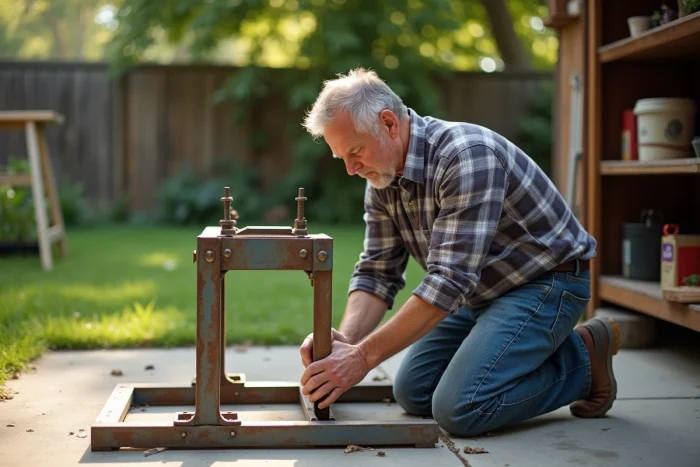
A generic lawn mower lift, or one poorly suited to your tractor, turns every maintenance operation into a minefield. Models sold as “for everyone” rarely perform as expected, and the slightest technical oversight can compromise the whole setup. Choosing the right materials is non-negotiable, and those who overlook a few specific rules quickly pay the price.
Many DIY solutions circulate in garages and online, but not all are equal. Building your own lawn mower lift, designed for the specific characteristics of YOUR machine, limits unpredictability, protects the operator, and simplifies every maintenance task.
Raising a lawn tractor: absolute safety or nothing
Under a raised lawn tractor, every detail matters. Relying on an approximate device means risking an unfortunate move or sudden breakage. Before starting, equip yourself properly: thick gloves, shoes with solid grip, safety glasses. Every precaution reduces danger, especially when handling the chassis or using sharp tools.
Weight and width vary by model: an obvious fact that general technical sheets often overlook. Some rely on hydraulics for added comfort, while others choose a simple mechanical system, with steel tubes and a powerful screw jack. But regardless of the method, stability cannot be ignored.
Before embarking on building a lawn mower lift for a tractor, the list of points to monitor is essential:
- A reliable locking system that prevents the mower from accidentally starting.
- Reinforced anchors, combined with flawless welds.
- Regular checks to spot any weaknesses or wear over time.
Serious lifting always starts with a thorough inspection: no slack, never approximate. This is the best way to perform effective maintenance on the riding mower while remaining calm.
Which materials to choose? Options that really make a difference
To ensure a robust lawn mower lift perfectly matched to your lawn tractor, prioritize a steel frame. A square tube of 40×40 mm offers far superior resistance to deformation compared to thinner tubes. As for the support plates, avoid compromise: at least 5 mm thick, otherwise the metal bends and safety falters.
In search of gradual lifting, the combination of a worm screw and a crank remains a safe bet, or a more traditional screw jack for added simplicity. Those looking to go further adopt hydraulics, allowing for the lifting of very heavy equipment without unnecessary strain. Another crucial detail: the anchor point must follow the center of gravity; otherwise, stability is lost and tipping becomes a threat.
To guide you in choosing components, here are the elements to prioritize:
- Welded steel: for the main structure and supports.
- Bearings: they make the ascent smooth and limit premature wear.
- Safety pins: they lock the device at the desired height, with no margin for error.
Adjust the length of the lever arms to the width of your mower. If the machine is large, install a cross brace to strengthen the whole setup. A tip favored by seasoned mechanics: double each weld at stress points to maximize strength. Ultimately, what matters is the precision of the assembly: the slightest approximation will sooner or later affect the reliability of the tool.
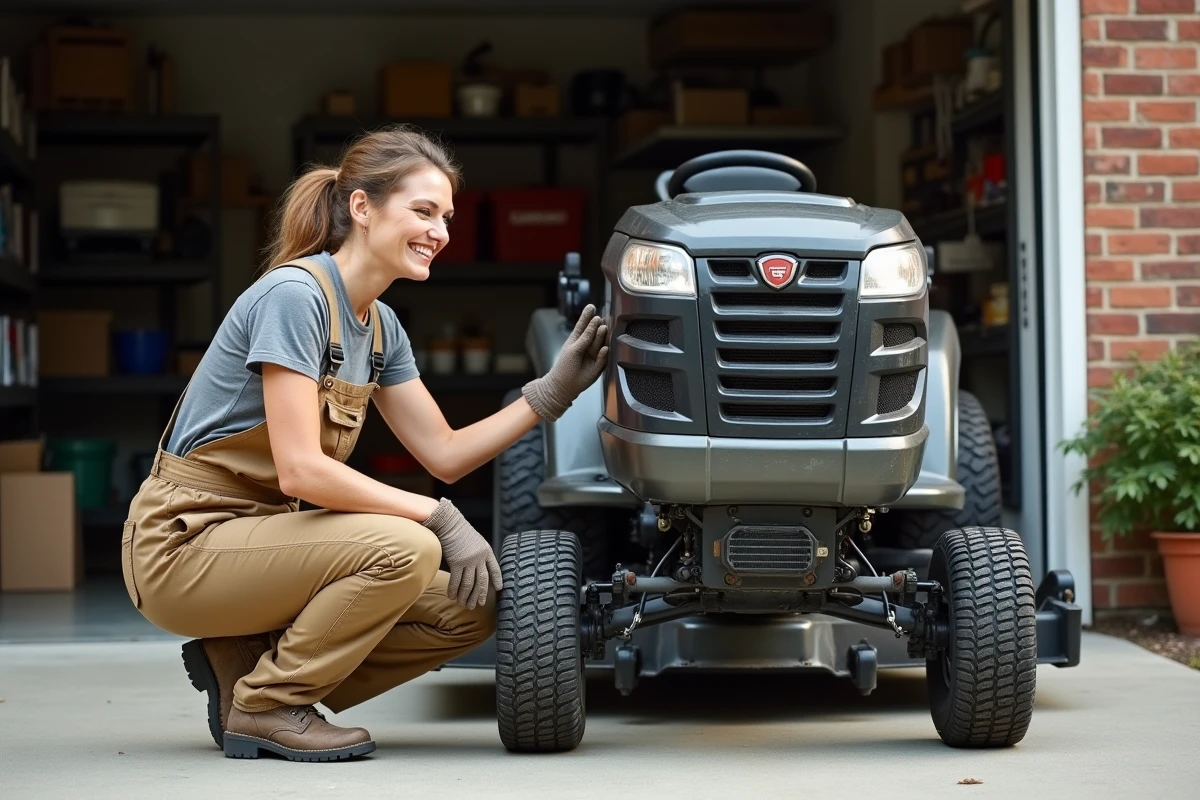
After lifting: maintain, clean, and adjust to preserve your equipment
A look under the deck: leave nothing to chance
The elevated machine provides access to areas usually unreachable. The first reflex: carefully remove the clump of grass and debris stuck under the deck. A wooden spatula is enough to protect the casing while getting rid of sticky residues. It’s quick, but it makes a huge difference in the efficiency of the blades.
To ensure the mower runs smoothly, continuously inspect the key points that make a difference:
- Check the belt: the slightest crack or sign of wear requires immediate attention.
- Check the tension, replace the belt if it has slipped. A misalignment is enough to compromise the cut and quickly wear out the mechanics.
Blade care and engine maintenance: small gestures, big impact
Sharpening the blades should be done methodically. An appropriate file can do the job, but those who are unsure should not hesitate to consult a professional, especially if the balance of the blades seems uncertain. A sharp blade ensures a clean cut, protects the engine, and prolongs the lifespan of the equipment.
Also, remember to check the engine oil level and the condition of the filter. A simple check that prevents many breakdowns during the season. This is the time to precisely adjust the cutting height: each wheel must be positioned identically, a detail that protects the lawn and ensures smooth operation. Taken seriously, these actions transform the lawn mower lift into a valuable ally for tractor maintenance. By providing this custom solution for your equipment, you elevate maintenance standards, and the peace of mind that comes with it lasts much longer than just one season.