To say that fiberglass and asbestos share a relationship would be jumping to conclusions. One has flooded our construction sites for over half a century, while the other has left an indelible mark on public health. Yet, the confusion persists, fueled by fear of fibers and technical ambiguity. Here are the uncomfortable truths and the precautions that must be taken, so as not to confuse protection with danger.
Health authorities draw a clear line: drastic regulations for asbestos, simple recommendations for fiberglass. This contrast raises questions, especially when dealing with older buildings or preparing for renovations. It is better to know precisely what you are dealing with before approaching a questionable wall or ceiling.
Fiberglass and asbestos: understanding the differences and misconceptions
Many still confuse fiberglass and asbestos. On one side, fiberglass, installed for years in our walls, plays the role of an essential thermal insulator. On the other, asbestos, once ubiquitous for its fire-resistant properties, has ultimately been eradicated from construction sites due to its toxicity, not without leaving behind a burdensome legacy.
Their true difference lies in the structure of their fibers. Fiberglass results from the melting of sand and recycled glass, giving rise to these mineral wools used in rolls and panels. Asbestos, a natural mineral, appears in the form of ultra-fine asbestos fibers, once added to cement, in spray coatings or ceiling tiles. Certainly, both materials help limit heat loss, but the comparison stops there.
False beliefs persist, however. Some still worry about installing fiberglass as if it were asbestos, or about exposing their families to imaginary dangers. In reality, asbestos remains the only fiber that has a scientific consensus on its harmfulness, supported by the International Agency for Research on Cancer. Fiberglass, despite its irritating effect during installation, is not classified in the same category.
To dispel doubt, it is better to look into the installation date of the insulators and their origin. If your house was built before 1997, caution is warranted, as asbestos-containing materials may still be hiding in corners. On the ‘fiberglass and asbestos’ page, you will find precise explanations about their composition and respective uses. A reflex to adopt: never minimize risks when renovating older buildings. Vigilance is never superfluous when health is at stake.
What are the real health dangers associated with these materials?
When it comes to health, inaccuracies become unacceptable. Asbestos, in all its forms, exposes individuals to serious pathologies once its asbestos fibers become airborne and breathable. These microscopic dust particles infiltrate the lungs and can, over time, trigger lung cancer, mesothelioma, or severe asbestosis. On this point, the International Agency for Research on Cancer leaves no room for doubt.
The intensity of the risk depends on the degree of degradation of the materials. An intact panel keeps the asbestos contained; a simple drill or a crack and there are the fibers dispersed in the air. This danger is far from abstract: every year, construction workers and individuals still pay a high price for unanticipated exposure while working with asbestos-containing materials.
Fiberglass, on the other hand, belongs to a different category. The artificial mineral fibers it contains can cause irritations: itching, stinging eyes, temporary cough during installation. But to date, no chronic pathology or cancer has been attributed to fiberglass under normal usage conditions. Scientists are, however, monitoring other fibers, such as refractory ceramic fibers, whose potential toxicity warrants increased vigilance.
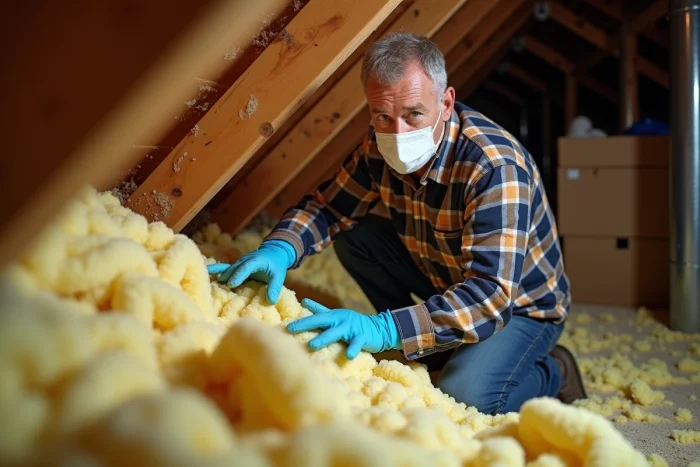
Before handling fiberglass, some precautions are necessary: gloves, filtering mask, covering clothing, and a well-ventilated room. These actions are generally sufficient to limit discomfort. For asbestos, however, the equation is clear: never intervene without expertise.
Essential precautions and best practices for handling or disposing of these insulators at home
Before any intervention: have an asbestos diagnosis done
Any renovation project in a building constructed before July 1997 begins with an essential step: checking for the presence of asbestos in walls, roofs, or other elements. Only a certified diagnostician is qualified to identify asbestos-containing materials. This verification is crucial for the safety of everyone, from the owner to the simple craftsman.
Handling and protection: actions to follow
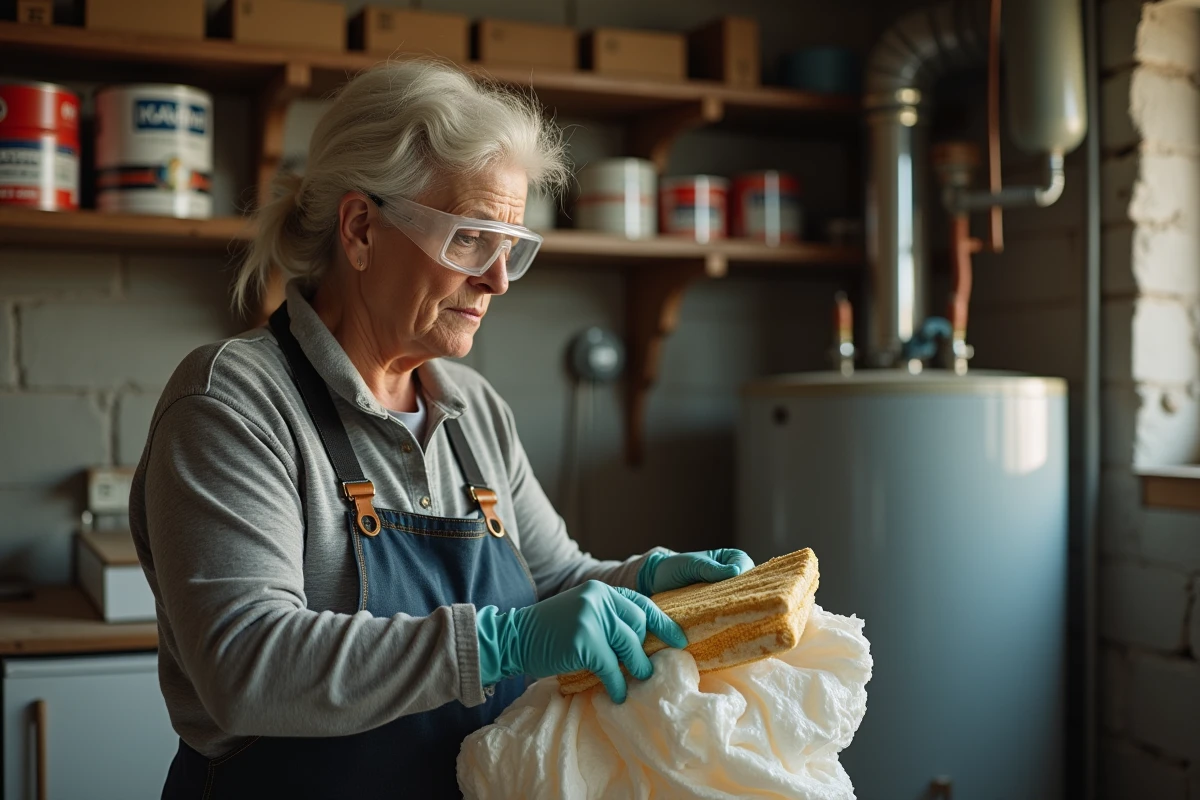
For fiberglass and other mineral wools, rely on appropriate personal protection: sturdy gloves, covering suit, certified FFP2 or higher dust mask. Work in a damp environment to avoid fiber dispersal. For asbestos, it’s a different story: any intervention on asbestos insulation must be entrusted to a specialized company. Attempting to remove it yourself exposes you to immediate and serious risks.
Here are the steps to follow to limit exposure and safely handle waste:
- Carefully pack fiberglass in airtight bags before leaving the site.
- Store these waste materials in waterproof containers and direct them to the designated waste disposal facilities.
- For any asbestos waste, a dedicated channel exists: contact your local municipality to learn about local procedures.
Alternatives and environmental vigilance
To improve the thermal insulation of the house, other options exist: cellulose wadding, plant-based insulators, materials from recycling. These alternatives limit health risks and reduce ecological footprints. But whatever solution is chosen, handling insulating products requires method and attention to ensure everyone’s safety, both at home and in the neighborhood.
Between caution and knowledge, the line is sometimes thin. But in doubt, it is better to have too much protection than not enough. It is up to everyone to refuse chance, so that today’s comfort does not become tomorrow’s risk.