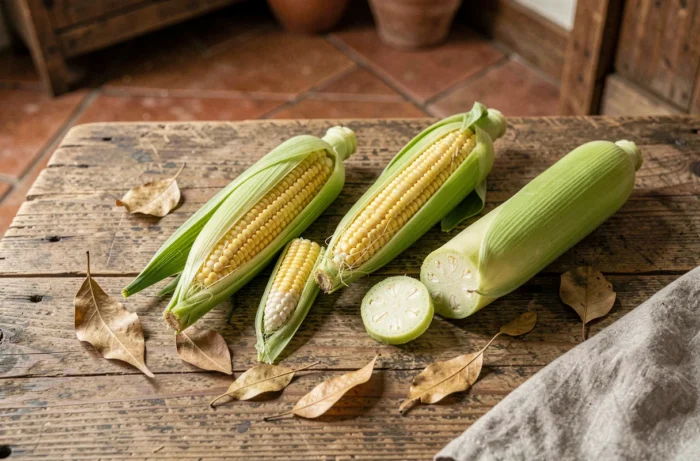
The cobette is that little half-ear of golden corn that you bite into with your fingers. Popularized in France by KFC restaurants, it remains relatively unknown beyond the fast-food counter. The term does not refer to a variety of corn or an agricultural label: it is a service format derived from the English word “cob” (ear of corn). What changes everything is what we do with it in the kitchen.
Cobette and fries: the nutritional comparison that really matters
Have you ever hesitated between a cobette and a portion of fries at KFC? The instinct is to think that the ear of corn is necessarily healthier. The reality requires a bit more nuance.
Sweet corn, consumed plain, is a vegetable rich in fiber and B vitamins. But a cobette served in fast food never arrives plain on the plate. It is generally baked and then brushed with butter or a mixture of fats. It is the addition of butter that shifts the caloric profile, not the corn itself.
To understand the cobette’s definition and uses in detail, it is essential to distinguish the restaurant version from the home version. In restaurants, the amount of added fats is standardized and rarely negligible. At home, you control the butter, oil, and spices.
The classic portion of fries, on the other hand, absorbs a large amount of frying oil. In comparison, even a buttered cobette provides more fiber and less saturated fat. The homemade cobette without butter remains the lighter choice of the two, by far.

Sweet corn on the cob: how variety and freshness change things in the kitchen
Not all ears of corn are created equal. The sweet taste, melting texture, and cooking hold depend on two factors that online recipes rarely mention: the harvest stage and the cultivated variety.
An ear harvested young, when the kernels are still milky, will naturally be sweeter and more tender. A few more days in the field, and the sugars turn into starch: the kernel becomes mealy, less pleasant to bite into.
Fresh, frozen, or canned corn
Fresh corn on the cob, bought in season (summer and early autumn in France), offers the best result for a homemade cobette. Frozen corn is a decent alternative, as it is generally blanched and frozen shortly after harvest, preserving some of the natural sugar.
Canned corn, however, is already shelled. It does not allow for a strict cobette preparation, as you need a whole ear or one cut in half. If you find frozen half-ears in supermarkets, that is the most convenient format out of season.
Cooking the cobette in the oven, on the barbecue, and in boiling water
Cooking is the moment when the cobette takes (or loses) all its interest. Three methods stand out, each with a very different result.
- In the oven: wrap the half-ear in aluminum foil with a thin layer of butter or a drizzle of olive oil. Allow about twenty minutes at high temperature. The kernels caramelize slightly, adding a grilled flavor.
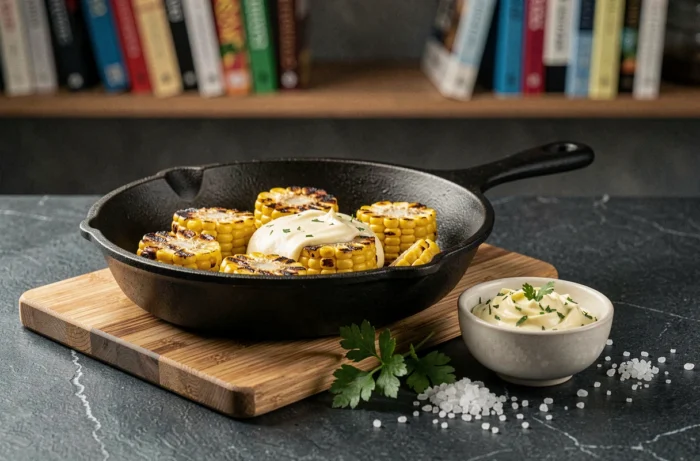
- On the barbecue: place the ear directly on the grill, with or without the husks. The intense heat gives grill marks and a smoky flavor. Turn regularly to prevent the kernels from burning.
- In boiling water: the quickest method. Immerse the ear in salted water for about ten minutes. The result is tender but without caramelization. This is the most neutral version, ideal if you want to add seasoning after cooking.
Seasoning ideas to go beyond classic butter and salt
The butter and salt duo remains a classic, but the cobette lends itself to much more varied flavors. Here are some concrete ideas to diversify meals.
- Mexican mix: lime juice, Espelette pepper (or chili powder), fresh coriander, and a sprinkle of grated cheese. This is a version inspired by elote, the Mexican street corn.
- Mediterranean version: olive oil, garlic powder, smoked paprika, and a few shavings of parmesan. The smoked paprika replaces the barbecue flavor if you cook in the oven.
- Sweet-salty: a drizzle of honey, melted butter, and a pinch of fleur de sel. The kernels caramelize more in the oven with this combination.
- Fresh herbs: chopped chives, parsley, and tarragon mixed with softened butter. Spread on the hot ear so that the butter melts immediately.
Seasoning is always added after cooking, except for the butter in foil. Spices burn quickly when in direct contact with heat.
The cobette as a side dish or as a main dish
As a side dish, the cobette is a great substitute for fries or rice during a grilled meal. It adds crunch, color, and a convivial aspect (you eat with your fingers).
As a main dish, count two to three half-ears per person, accompanied by a green salad and a yogurt sauce. It is a complete vegetarian meal if you add a legume on the side, such as black beans or chickpeas.
Homemade cobette or fast-food cobette: the real difference
The cobette you prepare at home and the one served at the counter share only one common point: the corn on the cob. For everything else, everything differs.
At home, you choose the amount of butter (or its absence), the type of oil, and the cooking time. In fast food, the recipe is fixed, with calibrated amounts of fats for a consistent taste. The homemade version allows you to cut the fat intake by two or three simply by reducing the butter.
The other difference lies in freshness. Fast food chains use standardized frozen ears. At home, in season, a fresh ear from the market offers incomparable texture and flavor. Out of season, frozen corn remains a good compromise, and the result far exceeds that of a fast-food side reheated under a lamp.
The cobette is neither an exotic product nor a technical recipe. It is an ear of corn cut in half, simply cooked and seasoned according to the moment’s desire. Its true strength lies in its versatility: summer barbecue, autumn meal tray, or convivial appetizer, it adapts to everything without requiring more than twenty minutes of preparation.